Snel Antwoord
Sizing solar panels for a seasonal property requires careful planning. De optimale configuratie hangt af van uw werkelijke verbruik, dakoriëntatie, batterijbehoeften en het kiezen van het juiste teruglevertarief.
Private second homes vs holiday rental villas
Evaluating solar for a holiday home in Spain requires a different approach than for a primary residence. A seasonal property may sit empty for several months, followed by periods of high occupancy during the summer or school holidays.
If the property is a private second home, electricity consumption during the empty months will be near zero, consisting only of the fridge, security systems, and standby power. If it is a holiday rental villa, summer consumption will be extremely high due to guests running air conditioning and pool pumps continuously.
The standing charge problem in Spain
Spanish electricity bills carry a high fixed standing charge based on your contracted power (potencia contratada). Even if you consume zero electricity during the winter, you will still receive a monthly bill (often €20 to €50+) simply to keep the grid connection active.
A standard solar installation cannot reduce this standing charge on its own. However, registering for a virtual battery tariff allows you to use your summer export credits to offset winter standing charges, potentially reducing your empty-month bills to zero.
Why physical batteries are a poor investment for holiday homes
Physical batteries are rarely viable for seasonal holiday homes. They represent a large upfront cost (€3,500 to €6,500+) and degrade over time. If the battery sits idle at 100% or 0% charge for long periods while the house is empty, its lifespan can be shortened.
A virtual battery tariff is a far better option. It carries no hardware maintenance risks and allows you to accumulate credits during empty months to offset your bills during high-occupancy periods.
Optimising for seasonal occupancy
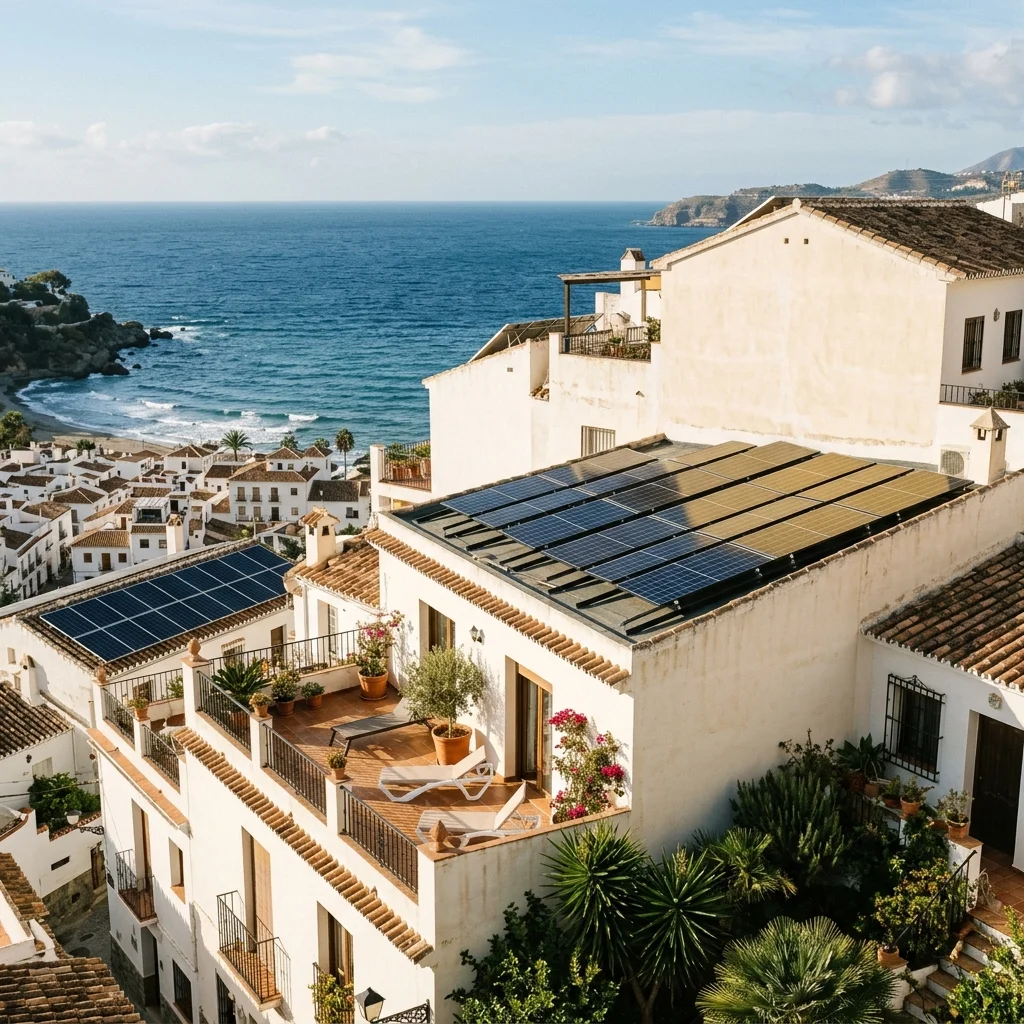
For holiday homes, we recommend sizing the solar array to cover the daytime baseload (including pool pumps and baseline cooling) during occupied periods. Avoid massive arrays that generate huge winter surpluses if you cannot utilize them.
For electricity tariff switching and post-install bill optimisation, we work alongside weSwitchSpain to ensure your export tariff and virtual battery are correctly managed during empty periods.