
Vertaling in uitvoeringDe inhoud van deze pagina is momenteel alleen in het Engels beschikbaar omdat onze redactie de Nederlandse vertaling controleert. De navigatie, knoppen en formulieren zijn al wel volledig vertaald.
Málaga Province Solar Battery & Storage Advice

Solar Batteries in Málaga

A comprehensive guide to solar batteries in Málaga. Understand the difference between physical storage, backup capability during blackouts, and virtual batteries.

Snel Antwoord

A comprehensive guide to solar batteries in Málaga. De optimale configuratie hangt af van uw werkelijke verbruik, dakoriëntatie, batterijbehoeften en het kiezen van het juiste teruglevertarief.

What a solar battery does

A physical solar battery (typically utilizing Lithium Iron Phosphate / LiFePO4 chemistry) stores surplus electricity generated by your panels during peak sun hours. Instead of exporting this energy to the grid for a low rate, you store it locally to run your lights, appliances, and air conditioning after the sun sets.

While this significantly increases your “self-consumption ratio” and reduces imports from your utility supplier, physical batteries represent a major upfront capital expense that must be carefully calculated.

Battery storage is not always backup power

CRITICAL WARNING: Having a battery does NOT mean your lights will stay on during a power cut. Standard grid-tied inverters automatically shut down during outages to prevent feedback into the grid (which could harm utility workers).

If you require backup power during grid failures (common in some rural areas of Málaga or during autumn storms), your system must include a hybrid inverter and an automatic transfer switch or backup gateway (such as the Tesla Gateway or Huawei Backup Box). These components isolate your home from the grid during a power cut, allowing you to run selected critical circuits from the battery.
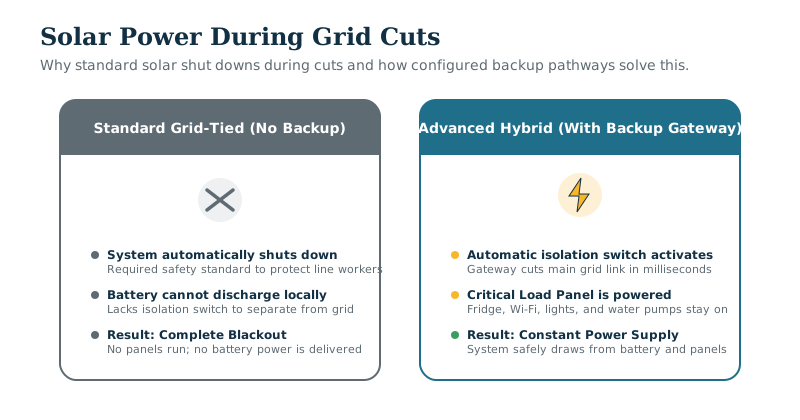
Diagram explaining why solar panels and batteries may need backup equipment to work during a power cut

When a physical battery makes sense

A physical storage battery is generally viable if:

  • Your primary electricity usage occurs in the evenings and overnight.
  • You charge an electric vehicle at home overnight.
  • You have a large solar array (5kWp+) that regularly generates massive daytime surpluses.
  • You require emergency backup power for critical appliances (medical equipment, security, water pumps).

When a physical battery is a poor investment

You should likely avoid a physical battery if:

  • The property is a holiday home left unoccupied for long periods of the year.
  • Your household baseline electricity bill is already very low (under €60/month).
  • You have access to a highly competitive “virtual battery” tariff from your supplier.

Physical battery vs. Virtual battery

Understanding the distinction between physical and virtual storage is critical:

  • Physical Battery: Physical storage installed at your property. Stores energy directly, supports backup power (if configured), but carries high hardware and installation costs.
  • Virtual Battery: A financial billing mechanism offered by some Spanish commercial suppliers. Your exported solar energy is converted into a cash balance (in euros) that sits in a cloud account and is used to offset your future electricity bills, including fixed charges. There is no physical hardware, no maintenance, and no upfront cost, but it does not support backup power during blackouts.
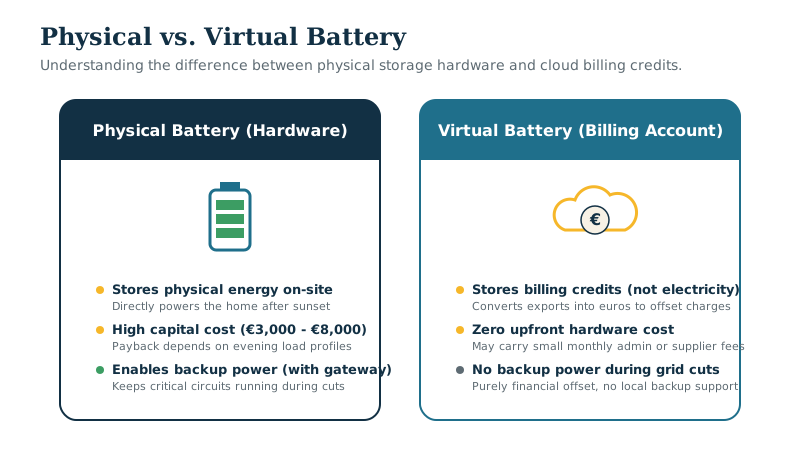
Comparison diagram showing the difference between a physical solar battery and a virtual battery tariff

Frequently Asked Questions

Is a solar battery worth it in Málaga?
A physical solar battery is worth it if you have high evening or overnight electricity consumption, such as running ducted air conditioning or heating pool pumps after dark. However, the high upfront hardware cost (€3,500 to €6,500) means it may extend your system's payback period if your baseline bills are low. For seasonal holiday homes, a virtual battery tariff is usually a far better financial choice. We recommend conducting a full bill review to verify your night-time consumption.
What size battery do I need for my solar panels?
Your battery size depends on your average night-time consumption and the generating capacity of your solar array. A standard residential setup typically pairs a 4kWp to 5kWp solar system with a 5kWh to 10kWh battery. Under-sizing means the battery drains too quickly, while over-sizing wastes money because you cannot fully charge it during the day. A practical next step is reviewing your hourly grid imports from your distributor's online portal to calculate your night-time storage needs.
Is a virtual battery the same as a physical battery?
No, a virtual battery is a cloud-based billing arrangement with an energy supplier, not a physical storage device. It converts your exported solar energy into a financial credit (in euros) to reduce your future electricity bills, whereas a physical battery stores actual electricity locally to run your appliances and provide backup power. A virtual battery has no hardware cost but does not keep your lights on during blackouts. We recommend choosing a virtual battery if your primary goal is reducing fixed charges.
Will a battery power my house during a power cut?
Only if your system is installed with a hybrid inverter and an automatic transfer switch or backup box. Standard grid-tied batteries shut down automatically during power cuts to protect utility workers. Isolating your home from the grid and powering critical circuits requires specific backup gateway hardware, which adds extra cost to your installation. A practical next step is checking if your quote explicitly details a backup box and emergency circuit wiring.
Can a solar battery be added later?
Yes, you can retrofit a battery to an existing system, but doing so later is often more expensive. If you think you may want a battery in the future, you should install a hybrid inverter during the initial phase. A standard inverter will need to be replaced or AC-coupled with additional hardware to accept a battery later. We recommend asking your installer to use a hybrid-ready inverter from day one.
What is usable battery capacity?
Usable capacity represents the actual amount of electricity you can draw from the battery without damaging its cells, which is different from its nominal capacity. For example, lithium batteries (LiFePO4) typically allow a 90% depth of discharge (DoD), meaning a 10kWh nominal battery has 9.0kWh of usable capacity. Lead-acid batteries only allow 50% DoD. Ensure your quote explicitly states the usable capacity and chemical composition of the storage system.
Why might a solar battery not save me money?
A battery may fail to save money if you have very low baseline evening consumption or if your supplier's import/export rates are already highly competitive. Additionally, if the battery is oversized, you will rarely charge it to full capacity, resulting in unused hardware that slowly degrades. We recommend calculating the payback period of the battery independently from the panels before making a decision.
How much does a solar battery cost in Málaga?
A high-quality 5kWh lithium battery starts at around €3,500 including installation. Larger 10kWh systems cost between €5,000 and €7,000 depending on the manufacturer and the hybrid inverter interface required. Sizing should always match your actual baseline bills to maximize your return. A sensible next step is to request an itemised quote from a vetted installer.
What is the lifespan of a solar battery?
Modern lithium batteries (LiFePO4) are highly durable, typically rated for 6,000 to 10,000 charge cycles. This equates to a functional lifespan of 10 to 15 years under normal daily use. We recommend choosing a battery with a minimum 10-year manufacturer warranty.