
Snel Antwoord
Understanding how solar export compensation, index-linked rates, and virtual battery contracts function in Spain is essential for maximising your return. De optimale configuratie hangt af van uw werkelijke verbruik, dakoriëntatie, batterijbehoeften en het kiezen van het juiste teruglevertarief.
What is solar export compensation?
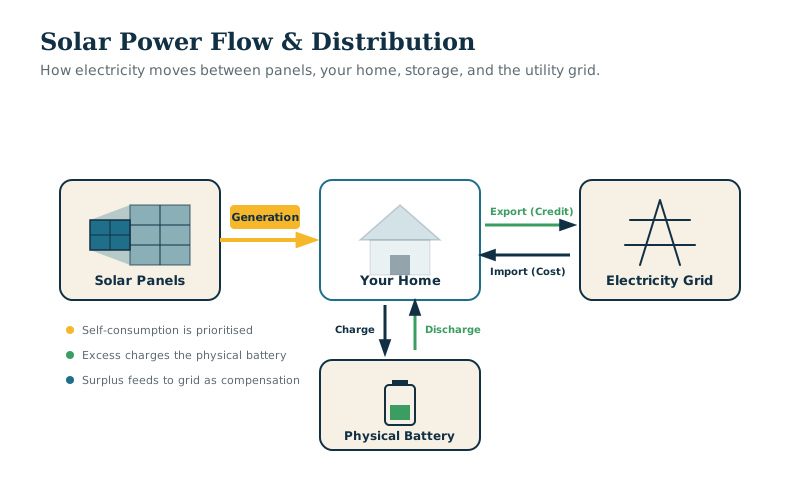
In Spain, solar export compensation (compensación de excedentes) allows you to offset your electricity bills by selling surplus solar energy back to the grid. When your panels generate more power than your home is consuming, the excess flows into the distribution network.
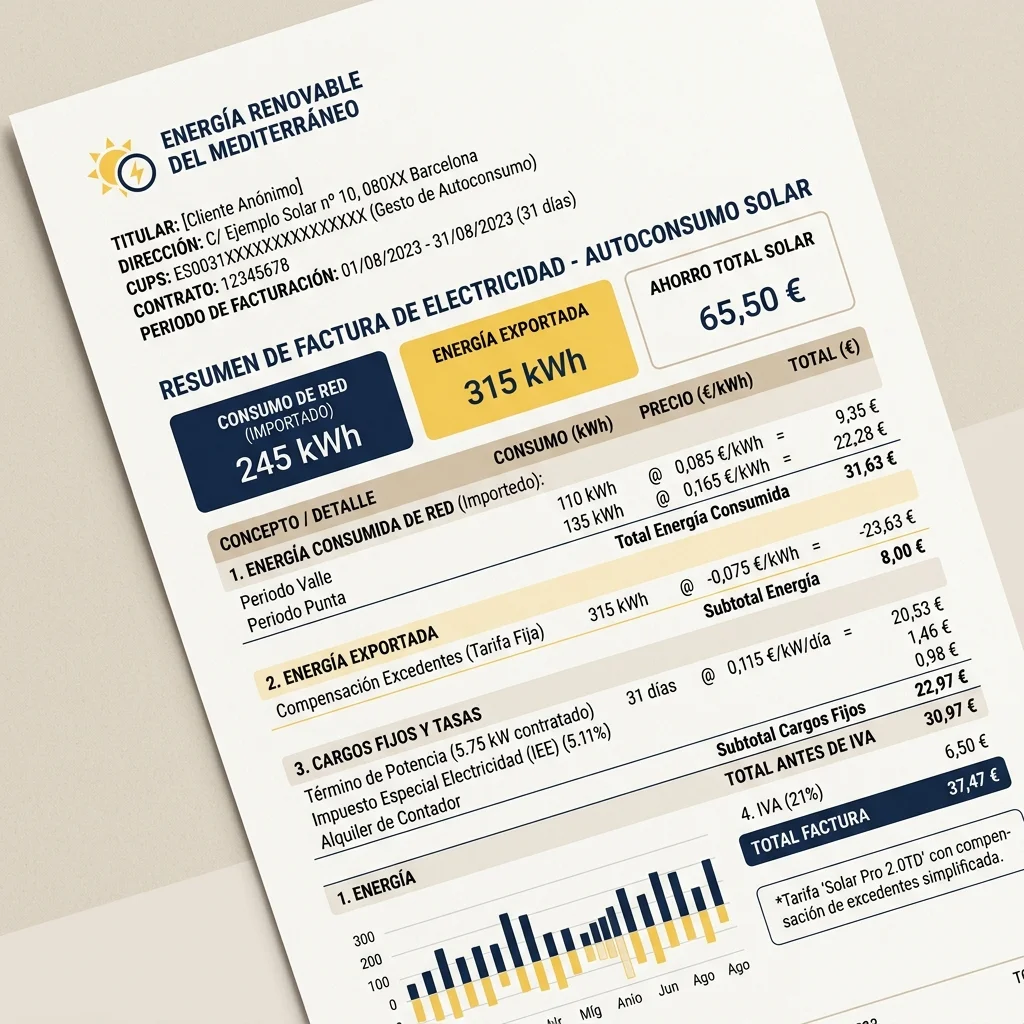
It is critical to understand that this is not a one-for-one “net metering” system. You do not get paid cash; instead, your supplier applies a financial credit to your bill in euros. Under standard regulations, this credit can only reduce the “active energy” portion of your bill to €0, leaving you to pay fixed standing charges (potencia and taxes).
Compare the whole tariff, not just the export rate
A common mistake is choosing an energy plan solely because it offers a high export rate (e.g., €0.10/kWh exported). If that same plan charges a high import rate (e.g., €0.28/kWh imported), you will likely lose money because most homes still import electricity during the evenings and nights.
When evaluating solar tariffs, you must look at:
- The import rate (cost of energy you buy from the grid).
- The export compensation rate (value of energy you export).
- The cost of contracted power (potencia contratada), which represents the fixed daily fee.
- Any standing monthly management fees or hidden administration surcharges.
Fixed vs. Indexed export compensation
There are two primary models for pricing exported solar energy in Spain:
- Fixed Export: The supplier pays a constant, pre-agreed rate (e.g. €0.08/kWh) for every unit of exported solar energy, regardless of the time of day. This is simple and predictable.
- Indexed Export: The compensation fluctuates hour-by-hour based on the Spanish wholesale electricity market (OMIE). While this can align with market values, during peak solar generation hours (12:00 to 16:00), grid supply is high, which often drives index-linked export rates down to €0.02/kWh or even zero.
How virtual batteries (batería virtual) work
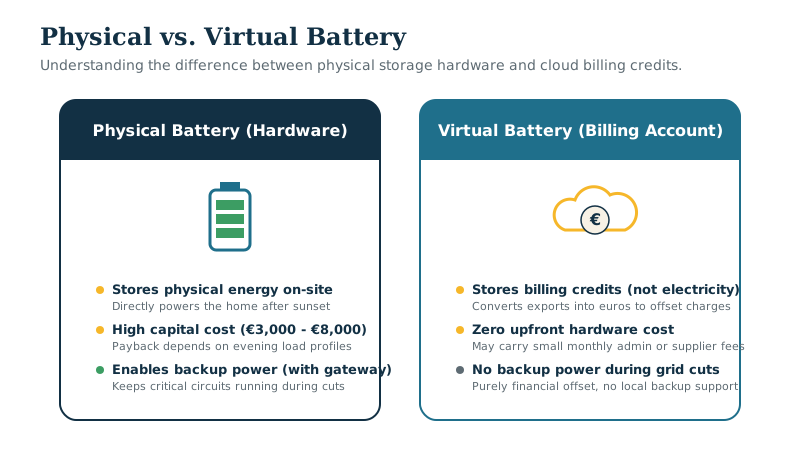
To bypass the legal restriction where export credits can only offset the active energy charges, many suppliers now offer a “virtual battery” (or cloud storage account).
Under this contract, all exported solar energy is converted into a euro balance. This balance is used first to offset your active energy charges to €0. Any remaining surplus credits are stored in your virtual account and can be used to offset:
- Fixed charges (potencia and meter rent) on the primary property.
- Taxes (electricity tax and IVA).
- Bills for a second property registered with the same supplier (e.g., a holiday home or apartment).
Why solar bills can remain surprisingly high
If you have installed solar panels but your electricity bill is still high, it is usually caused by one of three issues:
- Export compensation is not active: Your system must be legalised by the industry delegation and recognized by your distributor before credits appear on your bill. This process can take 1 to 3 months.
- High standing power costs (potencia): If you have not optimized your contracted power, you will pay high fixed charges even if you import zero energy.
- Wrong tariff: You are stuck on a standard tariff with poor solar terms.
Need help checking your solar export tariff?
Costa Solar Guide explains how export compensation, indexed export and virtual battery offers work. If you want a full electricity bill and tariff comparison after solar installation, our partner service weSwitchSpain can help review your current supplier and available alternatives.
Costa Solar Guide focuses on solar advice and installer introductions. weSwitchSpain focuses on electricity tariff comparison and switching support.