Snel Antwoord
Air conditioning represents the largest share of summer electricity bills in Spain. De optimale configuratie hangt af van uw werkelijke verbruik, dakoriëntatie, batterijbehoeften en het kiezen van het juiste teruglevertarief.
The perfect synergy: cooling and sunlight
Air conditioning is the single largest contributor to summer electricity bills in Spain, especially in Málaga and the Costa del Sol. Fortunately, cooling demand aligns perfectly with peak solar generation.
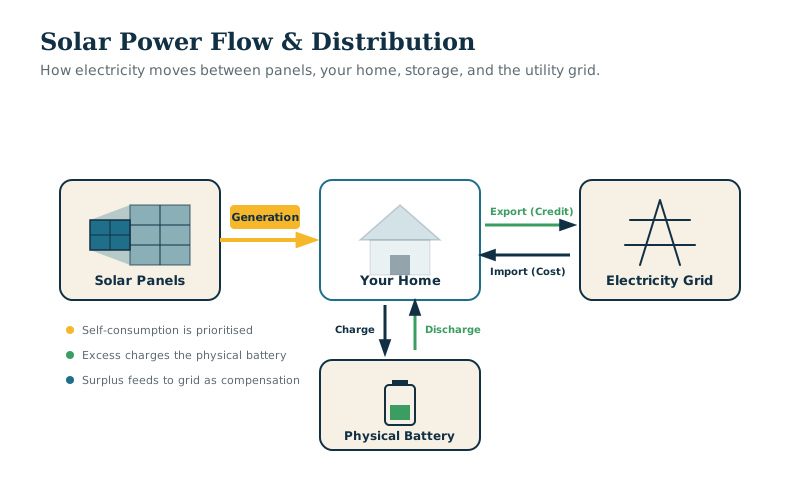
When the sun is at its hottest, your solar panels are generating maximum electricity. This means you can run your air conditioning units directly from your solar panels, bypassing grid imports.
Air conditioning consumption values
To design a system that runs air conditioning effectively, you must understand the consumption of your cooling units:
- Wall-Mounted Split Units: A standard split unit (e.g., 9,000 BTU or 2.5 kW cooling capacity) typically draws 700W to 1,000W of electrical power.
- Centralized Ducted Systems: Large centralized systems that cool an entire villa can draw 2,000W to 4,500W of electrical power.
If you have three split units running simultaneously, your household load can reach 3kW. A standard 4kWp to 5kWp solar system will easily cover this demand.
Inverter vs non-inverter air conditioning
Modern air conditioning units use inverter technology, which adjusts the compressor speed dynamically. Once the room reaches the set temperature, the power draw drops significantly (often to 300W or 500W).
Older non-inverter models run at 100% capacity continuously and draw huge start-up currents. If you have older units, upgrading to modern inverter cooling systems is highly recommended before installing solar.
Do you need a battery for air conditioning?
If you run your cooling primarily during the day (10:00 to 18:00), you do not need a battery. The panels will power the cooling directly.
However, if you run the air conditioning in bedrooms overnight, you will import electricity from the grid. Sizing a 10kWh physical battery can cover this overnight cooling, but you must evaluate if the upfront cost makes sense. A virtual battery tariff is a viable financial alternative to offset these overnight costs.
Optimising air conditioning usage with solar
To maximize your solar savings, adjust your cooling habits:
- Pre-cool the home: Turn on your air conditioning at 11:00 or 12:00 when solar production is high. Cool the walls and furniture while solar power is free. This reduces the work your cooling systems must do in the evening.
- Set reasonable temperatures: Set the thermostat to 24°C or 25°C. Every degree lower increases consumption by 6% to 8%.
For electricity tariff switching and post-install bill optimisation, we work alongside weSwitchSpain to find the best tariff matching your air conditioning patterns.