
Réponse Rapide
How to analyze and compare electricity contracts after installing solar panels. La configuration optimale dépend de votre consommation réelle, de l'orientation du toit, des besoins en batterie et du choix du bon tarif d'exportation.
There is no single best tariff
The Spanish electricity market features hundreds of commercial suppliers (comercializadoras), each offering distinct tariffs for solar customers. The optimal tariff for your property depends entirely on your consumption profile.
For instance, a home with a large physical battery that imports almost zero energy will prioritize low standing power charges (potencia) and a virtual battery with no monthly maintenance fees. Conversely, a high-consumption villa without a battery will prioritize the lowest possible night-time import rate (price/kWh).
What to compare in post-solar tariffs
When evaluating solar energy contracts, you must analyze the complete pricing structure:
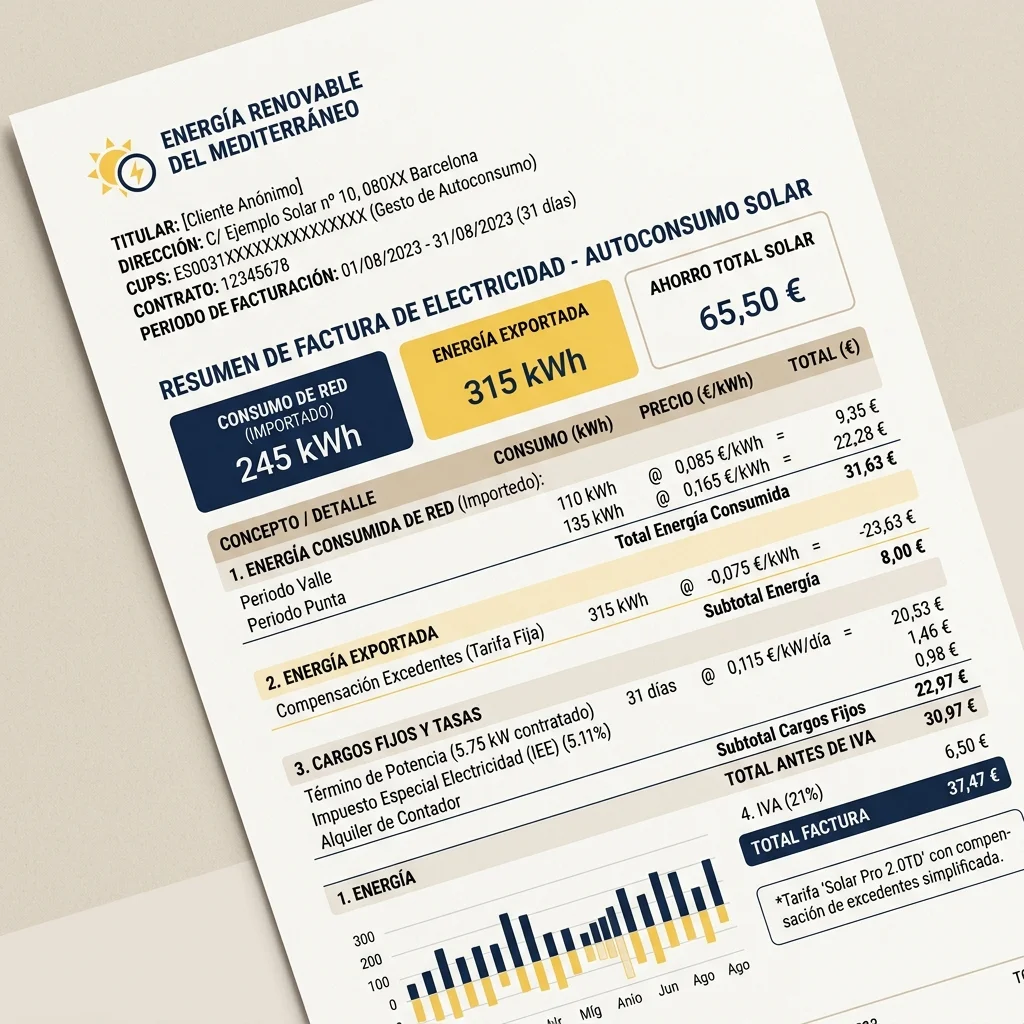
- Import Price (P1, P2, P3): The price you pay for energy drawn from the grid. Time-of-use tariffs have different rates for peak (punta), flat (llano), and off-peak (valle) hours.
- Export Compensation Rate: The rate paid for surplus solar energy fed back into the grid.
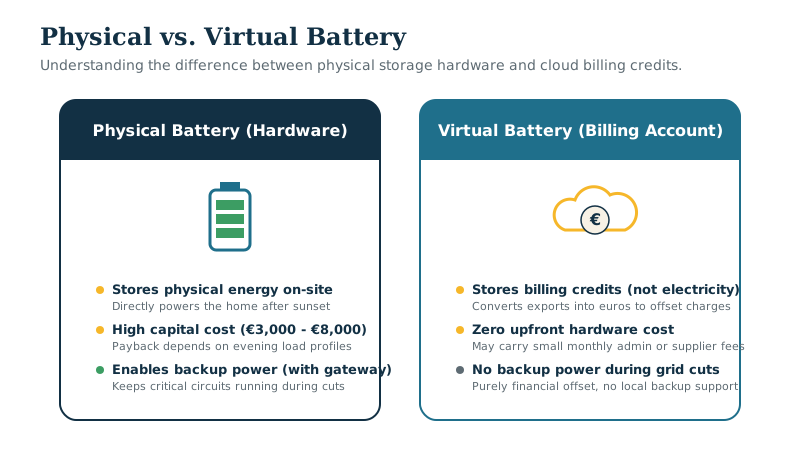
- Virtual Battery Option: Whether the supplier allows surplus credits to accumulate to offset fixed charges or apply to a second property.
- Fixed Daily Power Fee (Potencia): The cost per kW of contracted power capacity. This represents a significant portion of Spanish electricity bills.
Why import prices still matter after installing solar
Unless your property is completely off-grid with massive battery storage, you will continue to import electricity. Most residential solar production occurs between 10:00 and 16:00, whereas peak household usage often occurs in the evenings (lighting, cooking, entertainment) and overnight (air conditioning, heating, pool filtration).
Choosing a tariff with a slightly higher export rate but a penalizing import rate is a common mistake. A low import rate is critical for keeping bills low during the winter and cloudy periods.
Reviewing your contracted power (potencia contratada)
Contracted power represents the maximum electrical capacity your home can draw from the grid simultaneously before the main breaker trips. In Spain, you are billed a fixed daily rate per kW of contracted capacity.
Installing solar panels does not automatically mean you can reduce your contracted power, because you still need full capacity at night. However, if your solar system includes peak-shaving capabilities (where the battery feeds power to meet household spikes), you may be able to safely reduce your contracted power by 1 to 2 kW, saving up to €100 per year in fixed charges.
Want a full tariff comparison?
If you already have solar installed, the best tariff depends on your import prices, export compensation, battery setup, virtual battery terms and actual usage pattern. Costa Solar Guide can explain what to look for, while weSwitchSpain can help with a full bill review and supplier comparison.
Costa Solar Guide and weSwitchSpain are separate services focused on related parts of the solar and electricity decision.