Traduction en coursLe contenu détaillé de cette page est en cours de traduction. La version anglaise est présentée temporairement pour garantir l’exactitude technique. La navigation et les formulaires sont déjà traduits.
Spain Consumer Protection Solar Advice

Solar Installer Red Flags in Spain

Avoid expensive solar panels mistakes in Spain. Learn the critical red flags regarding equipment specifications, legal registration, backup promises, and payment security.

Réponse Rapide

Avoid expensive solar panels mistakes in Spain. La configuration optimale dépend de votre consommation réelle, de l'orientation du toit, des besoins en batterie et du choix du bon tarif d'exportation.

Red flag 1: vague quotes with no itemisation

A professional solar quotation must be fully itemised. If a quote simply lists a total price for a “5kW solar system” without specifying details, it is a significant warning sign.

At a minimum, the quotation must list the brand and model of the panels, the inverter model (and whether it is hybrid/battery-ready), mounting system specifications, electrical protections, town hall permit handling, and final registration fees (CIE/boletín).

Red flag 2: no consumption or electricity bill analysis

If a sales representative offers to size your solar system without looking at a recent electricity bill, you should walk away.

Your bill contains critical information about your contracted power capacity (potencia) and hourly consumption patterns. Sizing a system based purely on roof dimensions usually results in an oversized, inefficient installation that wastes money on unused hardware.

Red flag 3: pushing the 'bigger is always better' myth

In Spain, you only receive export compensation up to the value of the active energy you import in a given billing cycle. You cannot make a profit from exporting excess solar energy to the grid.

If an installer tries to sell you an oversized system that far exceeds your annual usage, it will result in low financial efficiency. Payback periods are fastest when systems are sized to match your actual daytime baseline consumption.

Red flag 4: vague details on the legalisation process

A solar system is not legally complete once the panels are mounted. It must be registered with the Junta de Andalucía and your regional utility distributor.

Confirm who is responsible for submitting the paperwork, and ensure the contract states that final payments are contingent on receiving the copy of the official registration document (CIE/boletín). If you buy an unlegalised system, you cannot claim tax discounts, and you will not be paid for exported energy.

Red flag 5: misleading battery backup claims

A common sales pitch is “you will have power during blackouts with a battery.” However, standard grid-tied batteries do not support backup function out-of-the-box.

To keep appliances running during a power cut, you must install a hybrid inverter and an automatic transfer switch or backup box. Ensure these hardware items and the labor for wiring critical backup circuits are explicitly detailed on your quote.
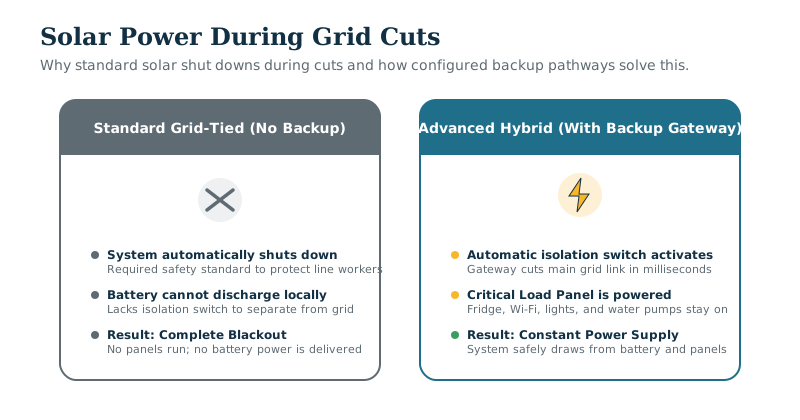
Diagram explaining why solar panels and batteries may need backup equipment to work during a power cut

Red flag 6: pressure selling and 'today-only' discounts

Be extremely cautious of sales representatives who demand immediate signatures or deposits to qualify for “today-only” discounts or “guaranteed” regional subsidies.

Subsidy allocations in Andalucia are strictly audited and never guaranteed by any installer. Take your time, compare quotes, and make a pressure-free decision.

Red flag 7: no after-sales plan or bill check support

Many low-cost solar companies disappear once the final invoice is paid. Ask prospective installers who handles warranty claims if an inverter fails, and whether they will check your first electricity bill after activation to confirm export credits are registering correctly.

If they do not provide a dedicated service number or direct support contact, be careful.

Frequently Asked Questions

What happens if a solar installation in Spain is not legalised?
An unlegalised solar system is considered an unauthorised electrical modification, meaning you cannot legally feed power into the grid or receive export compensation. While the system may generate electricity for direct use, you risk utility fines, voided home insurance policies, and an inability to claim local IBI property tax discounts. You must verify that your installer submits the completed CIE (boletín) certificate to the regional industry department. Before making the final payment, request official confirmation of the registration and check that your energy provider has updated your contract terms.
Are solar panel product warranties valid if the installer goes bust?
Manufacturer hardware warranties for panels and inverters remain valid because they are backed directly by the equipment producers rather than the local installer. However, your installer-backed labour, roof penetration, and workmanship guarantees will be completely lost if the company goes out of business. You can protect your investment by choosing reputable component brands (such as Huawei or Jinko) and verifying that the installer has a long-term track record in Spain. Before signing, check the manufacturer's warranty claim procedure to ensure you can deal with them directly if needed.
Should I avoid solar installers who use subcontractors in Spain?
Using subcontractors is not automatically a reason to reject an installer, provided the company maintains strict quality control and accepts full legal liability for the work. However, some companies use unvetted, low-cost subcontractors to bypass quality checks, which often leads to poor wiring or roof leaks. You should ask the installation company to specify in writing whether they use internal teams or subcontractors. Make sure the contract explicitly holds the main company responsible for all workmanship guarantees and roof repairs, regardless of who completes the physical installation.
Why is a non-itemised solar quotation a major red flag?
A non-itemised quote is a warning sign because it prevents you from verifying the quality, compatibility, and pricing of individual components. If a quotation simply lists a flat rate for a generic system size, the installer can swap specified panels or inverters for cheaper, inferior alternatives. You should insist on a fully detailed quotation listing the exact make, model, and quantity of panels, inverter, mounting structure, and electrical protection. Never pay a deposit until the installer provides an itemised breakdown that matches your agreed specifications.
What is an electrical boletín (CIE) and who should provide it?
The Certificado de Instalación Eléctrica (CIE), commonly known as the boletín, is the official document certifying that your solar installation complies with Spanish safety regulations. It must be prepared, signed, and submitted to the regional industrial registry by a licensed electrical installer. If an installer expects you to hire an external electrician to certify their work, this is a serious red flag indicating they lack qualified staff. Always confirm in writing that the boletín fee and registration submission are included in your quote price before signing the contract.
Why is a missing electricity bill review a warning sign?
A quote generated without analysing your electricity bill is highly likely to be sized incorrectly, leading to wasted investment or insufficient generation. Your hourly electricity consumption data and contracted power (potencia) are essential for selecting the correct solar system and inverter size. While some sales agents estimate system sizes using only aerial roof photos, this ignores your actual energy usage patterns. You must provide your installer with a copy of your electricity bill or access to your distributor's portal to ensure the proposal is tailored to your real consumption.
How do I check if a solar installer is legally registered in Spain?
You can check if a solar installer is legally registered by requesting their Spanish company registration number (CIF) and verifying their status in the Registro de Empresas Instaladoras (RITSIC). Legitimate installers must have registered electrical personnel on staff and carry active civil liability insurance to cover roof damage or accidents. If a company operates under a foreign entity or refuses to provide their registration details, you should not hire them. Before signing any contract, request a copy of their registration certificate and verify their insurance coverage limits.
Are battery backup claims during a power cut usually true?
Standard solar installations with batteries will not power your home during a grid failure because grid-tied inverters automatically shut down for safety reasons. To run key appliances during a power cut, you require a hybrid inverter equipped with a specialised backup box or automatic transfer switch. If an installer promises seamless backup power without detailing these extra hardware items and the rewiring of critical circuits, their claim is inaccurate. Always ask the installer to list the exact backup hardware and specify which appliances can run during an outage.
How should I handle solar installers who use high-pressure sales tactics?
You should walk away from any installer who uses high-pressure tactics, such as claiming a discount or government grant is only available if you sign a contract immediately. Legitimate regional grants in Spain have strict official application windows and cannot be guaranteed on the spot by any sales representative. If you feel rushed or pressured to pay a deposit, it is a sign that the company prioritises sales over proper engineering. Always request a written quote with a minimum 14-day validity period so you can compare options calmly.